SC Classic · Our restoration method
Classic car restoration.
Care at every stage.
From the body shell to the details that define a car. A working process illustrated through the cars in our workshop.
Material and form
The value of what
we preserve.
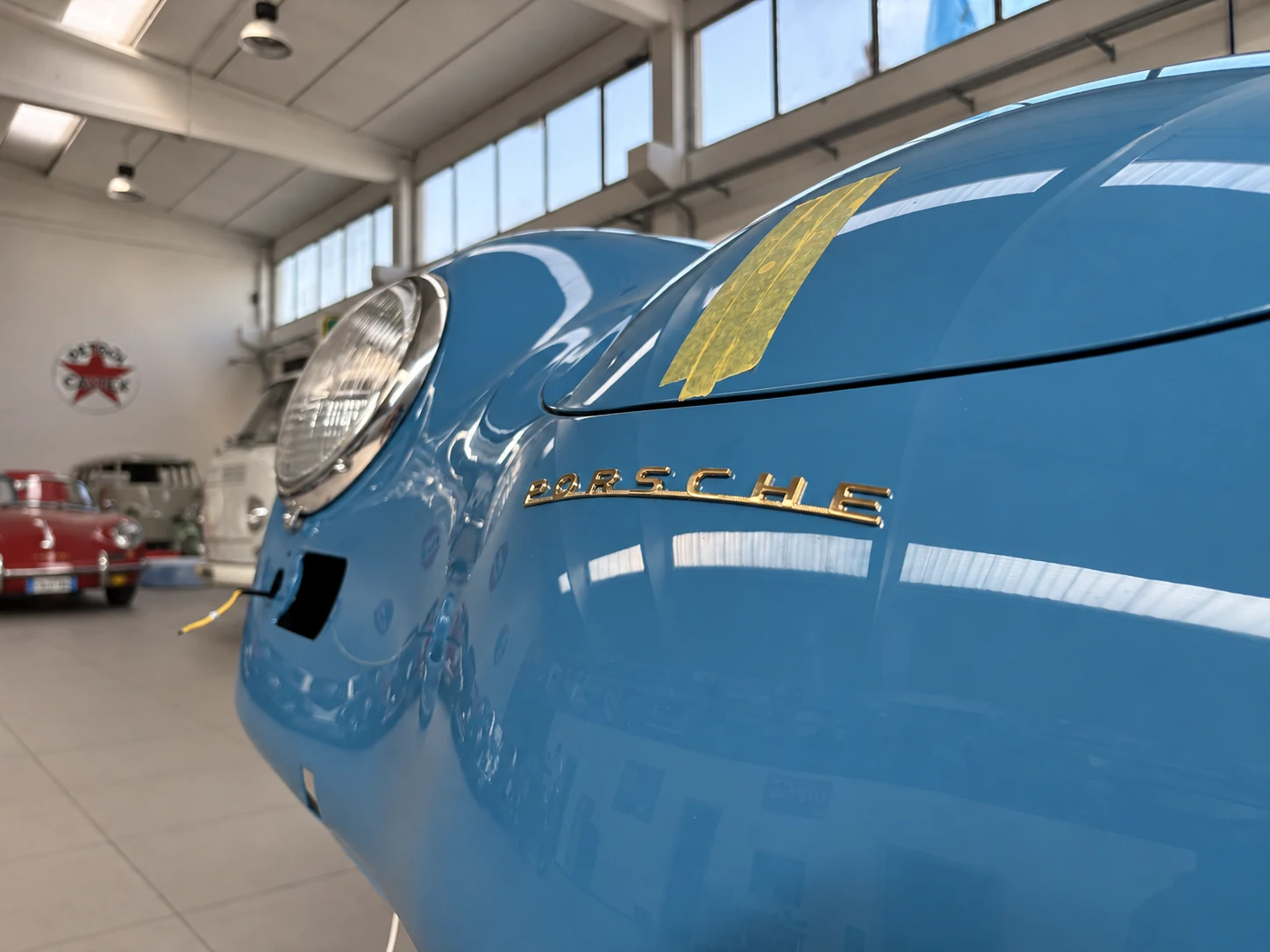
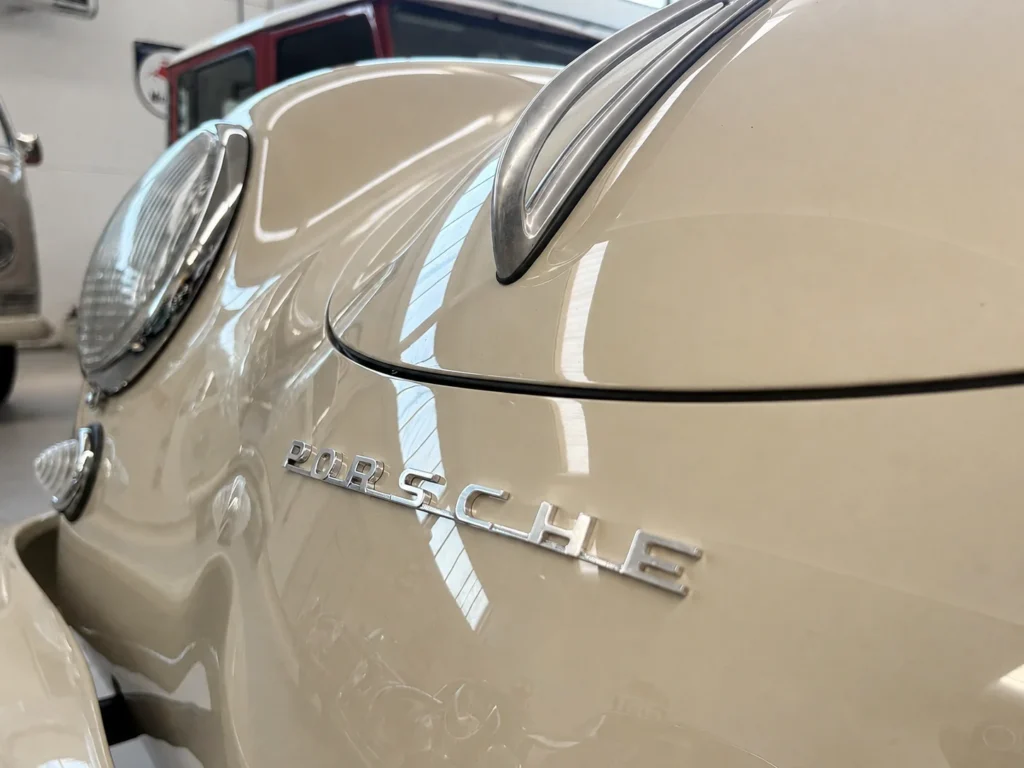
The same 1953 Pre-A 1500 Cabriolet at two stages of the project: the bare-metal body shell and details of the ivory bodywork.
Structure, panel fit and finishes are considered together. Every decision starts with the car's condition and history.
The 1953 Pre-A project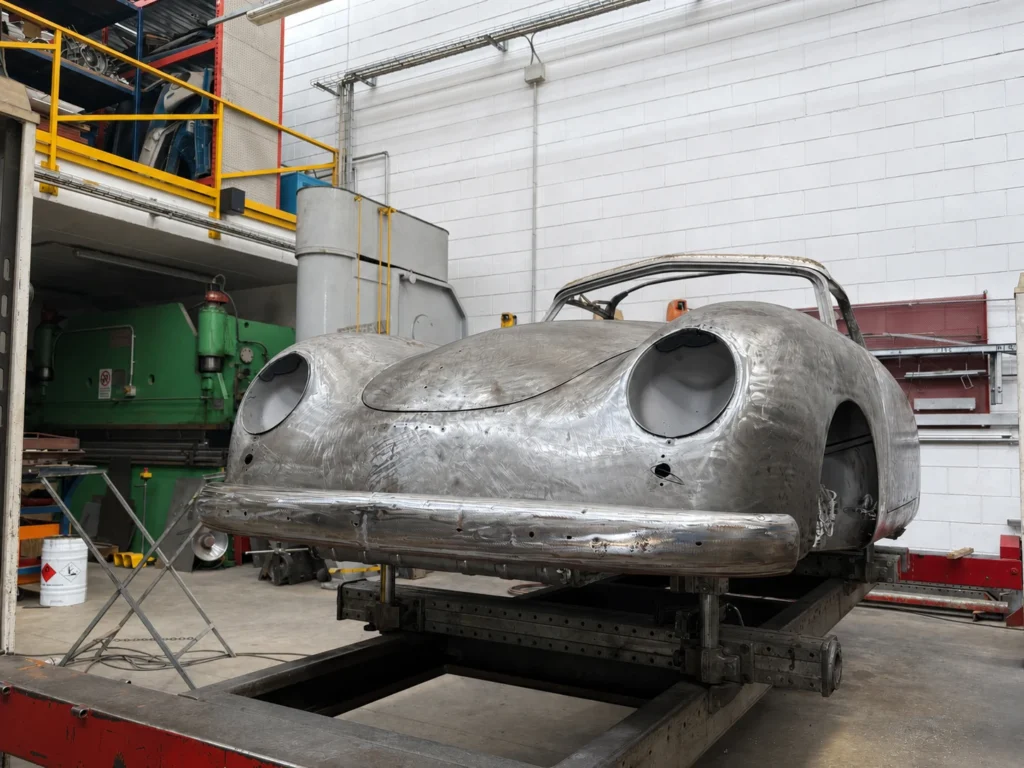
Inside the restoration
Restoration,
stage by stage.
Seven stages to explore. The scope of work is defined for each car: preservation, partial refurbishment or full restoration.
01Assessment and cataloguing
A considered restoration starts with the car's specification, previous work and the owner's objective. Documents, period photographs, materials and components help distinguish what can be preserved from what requires refurbishment.
Dismantling and cataloguing then connect each part to its position: fixings, spacers, seals and wiring routes are information worth preserving. Even a worn component can provide a useful reference for shape and installation.
We work on historic cars of all makes. A project may involve preservation, partial refurbishment or full restoration: the scope follows an assessment of the individual car.
02Body shell and metalwork
Corrosion, distortion and previous repairs must be assessed before the finish is built up. Floors, sills, joints and mounting points may be in a different condition from that suggested by the exterior paintwork.
Doors and lids must be considered alongside the surrounding body panels. Alignment, opening, closing and consistent panel gaps are interrelated checks: correcting a single edge can affect its fit with other elements.
The photograph of the 1953 Pre-A 1500 Cabriolet shows the unpainted body shell on the bench, with the lights removed. At this stage, profiles, openings and surfaces normally concealed by finishes become visible.
03Preparation and painting
The result depends on substrate preparation, even surfaces and a compatible paint system. Metal protection, primers and finish must be chosen as a system, following the technical instructions for the materials used.
Colour and final appearance must be compared with the car's documentation. The light in a photograph can change the perceived shade: choosing a colour requires references and assessment on the car itself.
The ivory bonnet belongs to the same 1953 Pre-A shown in bare metal. Its trim and badges show a later stage of the project, which is still in progress.
04Mechanical components and transmission
A clean surface does not reveal internal wear. Checks vary with the model and the agreed scope of work.
Sealing, fuel supply and lubrication form part of the assessment. When an overhaul is needed, clearances and wear must be compared with the technical data for the specific engine.
Noise, gear engagement and leaks help guide diagnosis. Finding the cause comes before deciding whether to repair or replace the affected components.
Joints, resilient components and the braking system must be considered as a whole. Checks cover both the condition of the components and how they work on the car.
05Electrical system
The electrical system must match the car's specification. Wire insulation, terminals, earth connections and protection where wiring passes through metalwork deserve attention before trim and instruments make connections harder to reach.
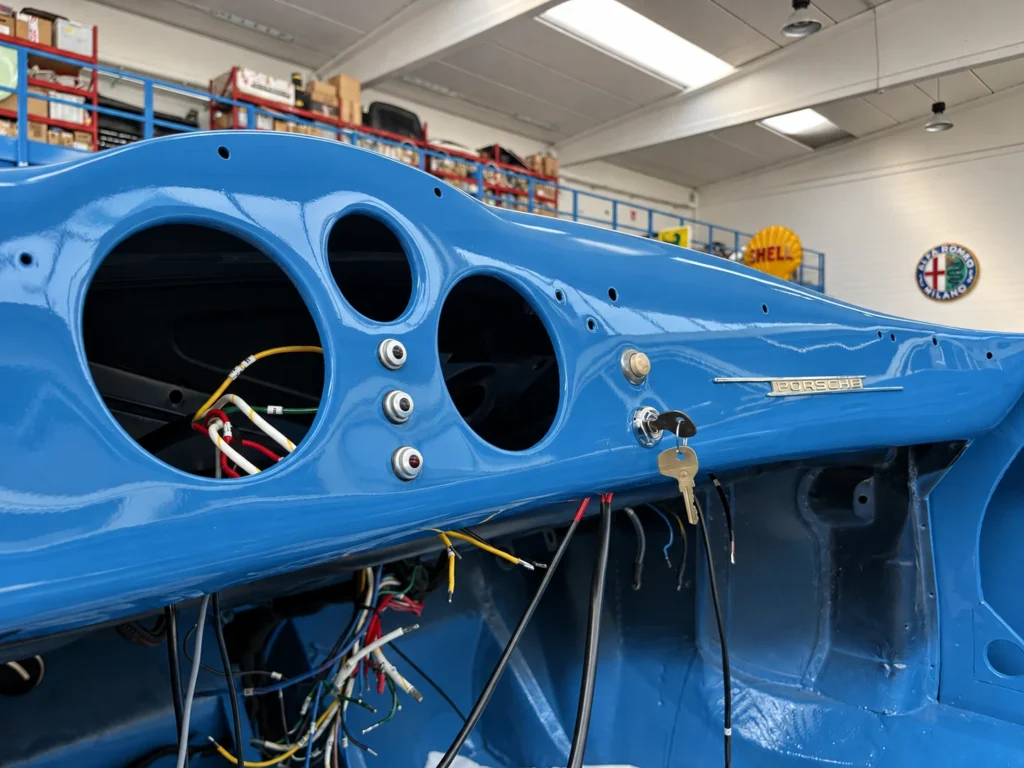
The blue dashboard belongs to the 1954 Speedster. The instrument openings still unoccupied and visible wiring document reassembly, without presenting the car as already complete.
At this stage, individual circuits are checked as components are installed. The complete system must then be tested with instruments, lighting and controls in their final configuration.
06Interiors and reassembly
Lights, seals, trim and badges require checks of their seating and mounting points. Installation must account for protecting painted surfaces and the fit between different materials.
Interior assessment covers materials, padding, stitching and components that can be preserved. Keeping an element consistent with the car's history may be preferable to replacing it simply for a more uniform appearance.
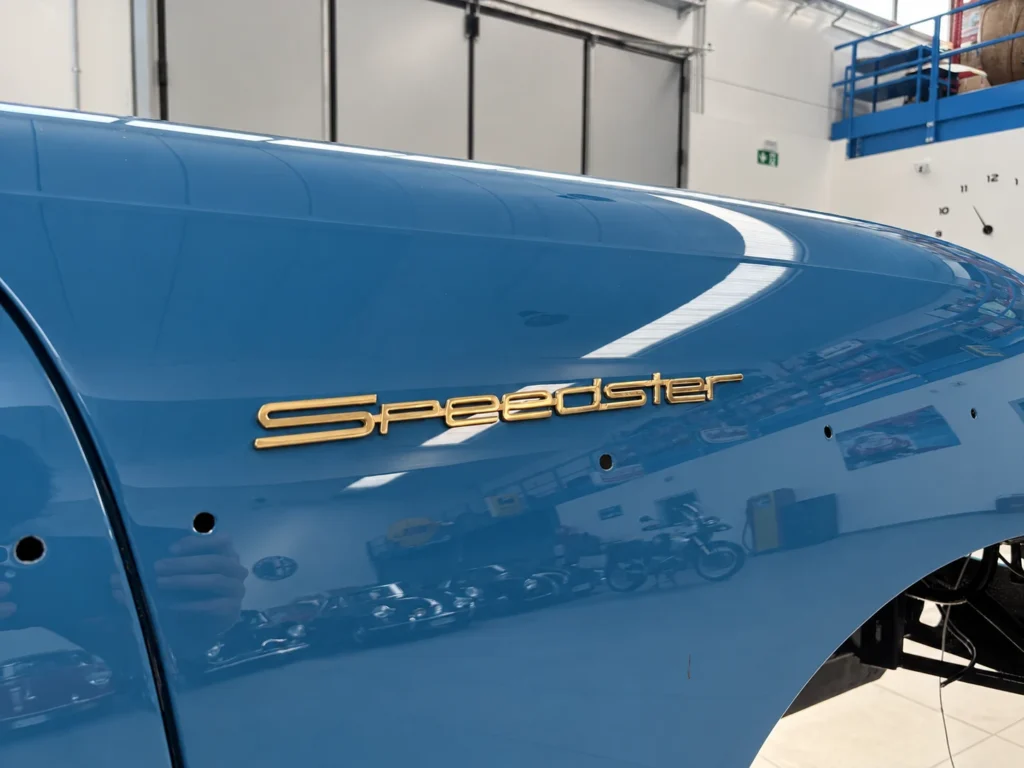
The photographs show two separate details from projects in the workshop: the lights of the 1953 Pre-A and the side script of the 1954 Speedster.
07Testing and documentation
Reassembly does not complete the restoration. Static and functional checks verify systems, controls and fit; road tests, when the car is ready, assess how everything works together.
Documenting the stages helps explain the work carried out and the choices agreed. The scope of testing and documentation is defined for each project.
The finishes
Small elements.
A distinct identity.
The Pre-A lights and Speedster script. Details from two projects in progress, with painted surfaces, seals and mounting points.
The 1954 Speedster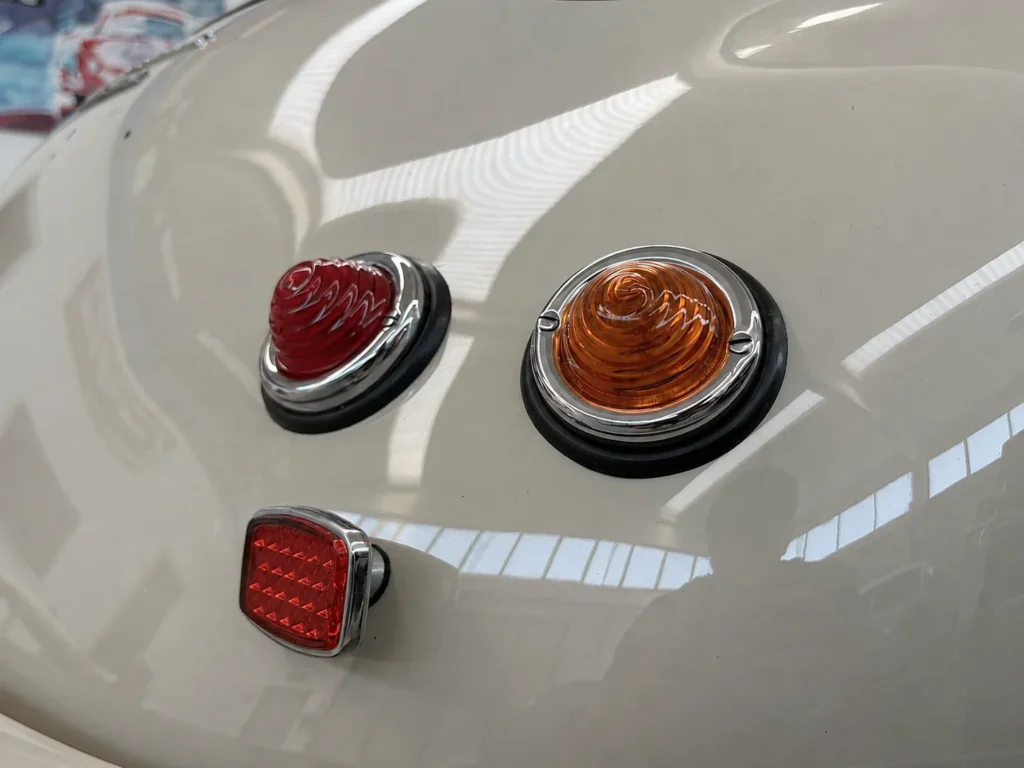
Before you begin
Is a full restoration necessary?
No. Preservation or partial refurbishment may better suit the car's condition and the owner's objective. The initial assessment defines the scope.
How is the estimate defined?
We start with an inspection of the car, its documentation and the agreed work. Some conditions only become apparent during dismantling and checks: we distinguish what is already established from what requires further investigation.
Do you restore all makes?
Yes. SC Classic works on classic cars of all makes. We assess each project according to the car's condition, documentation and the owner's objectives.
Technical references
To explore restoration principles: Porsche Classic, approach to the work; body panels and fit; overhauls and expertise. These references describe the manufacturer's work; the photographs on this page show SC Classic projects.
Cambiago · Milan
Every car has
a starting point.
Tell us the model, its history and the result you are looking for.
That is where the project begins.